



real garnet is Mohs 7–7.5 (scratches glass), has a specific gravity of 3.4–4.3 (sinks fast in dense liquids), is singly refractive (no doubled facet edges under a loupe), and iron-rich red garnets (almandine, pyrope) are weakly magnetic — a diagnostic no other common red gem shares. Red almandine does NOT fluoresce under UV light; ruby does. If your “garnet” fluoresces red under a blacklight, it is probably ruby or red glass.
Quick Answer
How to Test if a Garnet Is Real — Fast Checklist
- Scratch test: real garnet (Mohs 7–7.5) scratches glass. If it doesn’t, it’s probably glass or plastic.
- UV / blacklight test: real red almandine or pyrope garnet does NOT fluoresce. Ruby glows red. Red glass sometimes glows yellow or green. If your “garnet” glows red = probably ruby.
- Magnet test: iron-rich garnet (almandine, pyrope) sticks weakly to a strong neodymium magnet. No other common red gemstone does this.
- Flashlight test: shine a bright phone flashlight through the stone. Real garnet shows internal silk-like inclusions, a strong single color flash, and no doubled facet edges.
- Specific gravity: real garnet is 3.4–4.3 g/cm³ — denser than glass (2.5) or quartz (2.65). Drops to the bottom of a bromoform float test fast.
- Red flag combo: glows red under UV + feels light + no scratch on glass = ruby or red glass, not garnet.
- Pro verification: a certified gemologist with a refractometer and polariscope confirms in 2 minutes. Local jewelers charge $30–$75 for ID.
Mehedi’s Take: “The magnet test is the single most underused tool for garnet ID. Iron-rich almandine garnet, which is the most common red garnet on the market, sticks to a strong neodymium magnet. Ruby, red glass, red spinel, and red cubic zirconia — none of them react to a magnet. It’s a 10-second test and it costs you a $5 magnet.” — Mehedi Hasan, Diamond Industry Veteran
9 Home Tests for Real Garnet — Side by Side
Nine home tests from zero-cost to lab-grade. Pick two or three from the top of the table — any single test can be fooled, two agreeing is strong evidence, three agreeing is definitive.
| Test | Cost | Time | Accuracy | What This Means |
|---|---|---|---|---|
| Scratch test (vs glass) | $0 | 30 sec | High for ruling out glass/plastic | If it doesn’t scratch glass, it isn’t garnet, ruby, or sapphire |
| UV / blacklight test | $10 blacklight | 1 min | High for distinguishing from ruby | Red garnet does NOT fluoresce. Ruby glows red. Red glass glows yellow-green. |
| Magnet test | $5 neodymium magnet | 30 sec | Very high for Fe-rich varieties | Almandine and pyrope stick to a strong magnet; no other common red gem does |
| Flashlight test | $0 (phone light) | 2 min | Medium | Reveals internal silk, color concentration, no doubled edges |
| Specific gravity | $20 heavy liquid or digital scale | 5 min | High | Garnet 3.4–4.3 g/cm³ — denser than glass (2.5) or quartz (2.65) |
| Refractometer | $150 lab tool | 2 min | Very high | Garnet RI 1.73–1.89, singly refractive. Diagnostic. |
| Loupe inspection (10×) | $15 loupe | 5 min | High | Garnet shows inclusions, no bubbles. Glass shows bubbles. Doublets show glue line. |
| Breath / fog test | $0 | 10 sec | Low | Real garnet clears fog in 1–2 seconds; glass stays fogged for 3–5 seconds. Weak test. |
| Lab certification (GIA, AGL) | $75–$150 | 2 weeks | Definitive | Paper certificate confirming variety, origin, and treatment |
Verdict: for a quick confident ID at home, run the magnet test + the UV test + the scratch test. If all three say “garnet,” you have real garnet. If any one says “not garnet,” escalate to a jeweler or lab test before buying.
Make sure that your garnet is real and not an imitation. Whether you’re shopping for a garnet necklace or admiring a family heirloom, it’s only natural to wonder how to test if a garnet is real. Garnets, coveted for their deep reds and rugged greens, have been cherished for centuries. However, with the rise of synthetic garnets, knowing the difference is now more important than ever.
I remember the first time I held a garnet. It wasn’t in a jewelry store or some fancy place — it was at a flea market. I was drawn to the deep crimson stone, but I had no idea how to check its authenticity. That’s when I started researching at-home garnet test methods, and I was amazed to learn just how simple it can be.
✓ They use 100% authentic, ethically sourced gemstones that are independently tested by GIA.
✓ Each piece is designed right here in-house, ensuring nothing but originality in every piece.
✓ They prioritize comfort and ease with practical closures & high-quality ring jackets.
✓ When it comes to quality, they don't compromise - they exclusively use the finest premium metals in all our designs.

The magic of garnets lies in their rich color and natural sparkle, but there’s more to them than meets the eye. By using these gemstone authenticity tests, you can protect your investment and develop a deeper appreciation for genuine garnets. Whether you’re just starting your gemstone journey or adding to a collection, this guide provides step-by-step instructions on how to test if a garnet is real.
If you want to explore more about the fascinating world of gemstones, check out this guide on Black Jasper. For now, let’s dive into these practical methods to ensure your garnet’s authenticity!
Visual and Physical Home Tests to Learn How to Test if a Garnet Is Real
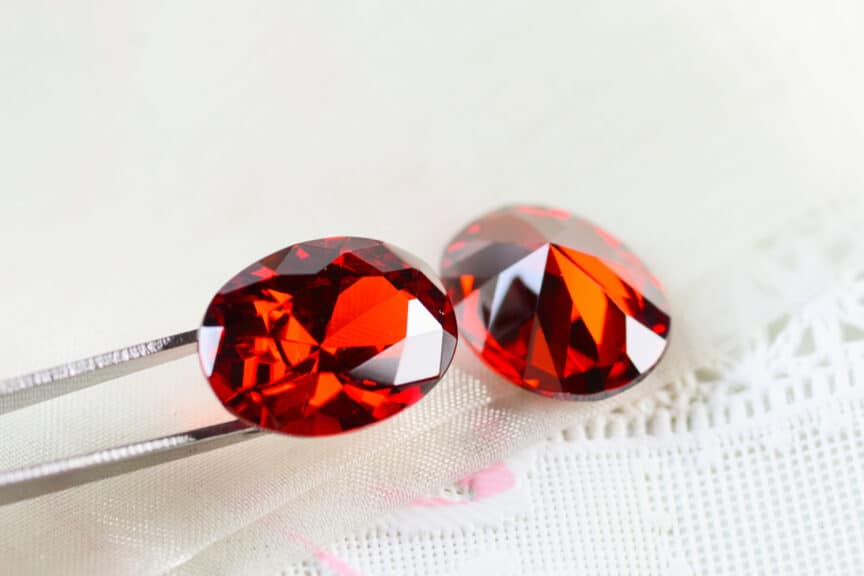
Before diving into advanced methods, some visual and physical tests can help you determine if a garnet is real. These simple steps rely on observation and basic tools you may already have at home.
Examine the Garnet’s Color
One of the easiest ways to check a garnet’s authenticity is by closely examining its color. Natural garnets have unique visual characteristics that fake or synthetic stones often lack.
- Consistent, Natural Colors:
- Real garnets usually exhibit deep, rich hues like red, orange, or green.
- Colors should appear uniform but not overly vibrant or artificial.
- Signs of Fakes:
- Synthetic garnets may have overly bright or unnatural colors.
- Some fake stones appear uneven, with patches of dull or overly shiny areas.
How to Inspect:
- Use a well-lit environment or natural sunlight.
- Hold the stone at different angles to observe its color consistency.
- Compare it to pictures of authentic garnets for reference.
Tip: If you’re intrigued by gemstones with vibrant hues, check out this guide on Orange Agate: Discover Its Mystical Meanings, Properties, and Hidden Secrets!.
Check for Inclusions
Natural garnets often have tiny imperfections or inclusions that form during the stone’s creation. These imperfections are a sign of authenticity and are rarely found in synthetic or fake garnets.
- Real Garnets:
- Contain natural inclusions like tiny mineral spots or fractures.
- These inclusions are visible under magnification but do not affect the overall beauty of the stone.
- Fake or Synthetic Garnets:
- Often flawless with no visible inclusions.
- Perfect clarity is a red flag for a synthetic stone.
How to Inspect:
- Use a jeweler’s loupe or a magnifying glass.
- Look closely for small imperfections or inconsistencies within the stone.
- Avoid stones that look unnaturally perfect.
Comparison Table: Real vs. Fake Garnets
| Feature | Real Garnet | Fake/Synthetic Garnet |
|---|---|---|
| Color | Deep, consistent, natural hues (e.g., red, orange, green). | Overly bright or patchy; artificial-looking colors. |
| Inclusions | Tiny imperfections visible under magnification. | No inclusions; flawless appearance. |
| Clarity | Balanced clarity with minor inclusions. | Too perfect; often too clear or glass-like. |
By using these visual and physical tests, you can take the first steps toward determining if your garnet is real. For a more in-depth understanding, continue with advanced at-home testing methods in the next section.
Conduct At-Home Testing for Garnet Authenticity
Testing your garnet’s physical and optical properties at home is an effective way to learn how to test if a garnet is real. Below are two reliable tests: the Scratch Test and the Light Test, both based on principles used by gemologists.
The Scratch Test
The Scratch Test helps determine a garnet’s hardness, which ranges between 6.5 and 7.5 on the Mohs scale of hardness. This scale, widely used in gemology, measures a stone’s resistance to scratching. Real garnets are relatively hard, meaning they can resist scratches from softer materials like glass but can be scratched by harder materials like quartz or diamonds.
How to Perform:
- Gather your tools:
- A piece of glass (window glass works well, rated 5.5 on the Mohs scale).
- A knife blade or any tool softer than 7.5 but harder than 6.5.
- Place the garnet securely on a soft surface to prevent damage to your table.
- Gently attempt to scratch the surface of the garnet:
- If the garnet resists scratching, it’s likely real.
- If it scratches easily, it could be glass or a softer synthetic imitation.
Important Notes:
- Do not press too hard, as this may damage the stone unnecessarily.
- Clean the garnet after testing to ensure no residue from tools remains.
Reference: The Mohs hardness test is a standard gemological practice used to evaluate gemstones, as detailed by the Gemological Institute of America (GIA).
The Light Test
Garnets are known for their unique single light refraction properties, meaning light entering the stone refracts in a single direction. This characteristic differentiates garnets from many synthetic or imitation stones, which may exhibit double refraction.
Steps to Test:
- Grab a flashlight or use sunlight as your light source.
- Shine the light directly through the garnet.
- Observe the light’s behavior:
- Real Garnets: Light will refract evenly without creating double images or splitting the light beam.
- Fake Stones: Imitations like cubic zirconia or glass often cause light to scatter unevenly or refract doubly.
Additional Tip:
Look for a steady “glow” effect under the light. Garnets may exhibit a subtle, consistent light play, whereas fakes might appear flashy or overly sparkly due to lower-quality materials.
Reference: The refractive index of garnets, as noted in studies by National Gem Lab Resources, typically ranges from 1.72 to 1.94, reinforcing their single refraction property.
Summary Table: At-Home Garnet Tests
| Test | Expected Result (Real Garnet) | What It Reveals |
|---|---|---|
| Scratch Test | Resists scratches from glass or softer tools. | Confirms garnet’s Mohs hardness (6.5–7.5). |
| Light Test | Refracts light evenly without doubling. | Confirms single light refraction properties. |
By conducting these simple tests, you can gain a clearer idea of how to test if a garnet is real. These methods are rooted in gemological principles and are beginner-friendly. For definitive results, however, consulting a professional gemologist is always recommended.
Advanced At-Home Techniques for Confirming a Garnet’s Authenticity
When basic tests like scratch and light examinations aren’t enough, understanding how to test if a garnet is real with more advanced techniques can provide greater confidence in identifying a garnet’s authenticity. These methods are still manageable at home with the right tools and a little patience.
The Specific Gravity Test
One of the most reliable ways to confirm a garnet’s authenticity is through the Specific Gravity Test, which measures the gemstone’s density. Real garnets have a specific gravity ranging between 3.5 and 4.3, depending on the type of garnet.
Explanation:
- Specific gravity refers to the ratio of the density of the garnet to the density of water.
- This test is helpful because many imitation stones, such as glass, have significantly lower densities.
How to Perform:
- Gather your materials:
- A digital scale capable of measuring small weights (to 0.1 grams or better).
- A container filled with water.
- A thread or lightweight holder to suspend the garnet.
- Follow these steps:
- Weigh the garnet in air and note its weight (W₁).
- Suspend the garnet in water without letting it touch the container’s sides and note its submerged weight (W₂).
- Apply the formula: Specific Gravity = W₁ ÷ (W₁ – W₂).
- Analyze the result:
- If the value falls between 3.5 and 4.3, the stone is likely a real garnet.
- Lower or higher values may indicate a fake or a different type of stone.
Note: This method works best with loose stones. If your garnet is set in jewelry, results may be less accurate.
Reference: According to gemological standards, specific gravity testing is a widely recognized method for identifying gemstones.
For additional insight into rare gems, check out Black Moissanite: Origins, Facts, and Why Youʼll Love It.
UV Light Examination
Another method to test garnet authenticity is examining how the stone reacts under UV (ultraviolet) light. Natural garnets typically exhibit little to no fluorescence, while synthetic stones may glow distinctly.
Explanation:
- UV light tests rely on fluorescence properties. Many fake gemstones contain materials that react under UV light, unlike genuine garnets.
How to Perform:
- Use a UV light source (commonly called a “black light”).
- Place the garnet in a dark room and shine the UV light directly on it.
- Observe the stone:
- Natural Garnets: Generally, they won’t fluoresce. If there’s any reaction, it will be faint and limited to specific garnet types.
- Fake or Synthetic Garnets: May glow brightly in hues like green, blue, or pink due to artificial additives.
Caution: While this test is helpful, some rare garnets (e.g., spessartine) may exhibit weak fluorescence. Combining this test with others provides more reliable results.
Reference: Studies by gemstone laboratories confirm that UV fluorescence can differentiate synthetic and natural stones.
Summary Table: Advanced Techniques
| Test | What It Measures | Expected Results for Real Garnets |
|---|---|---|
| Specific Gravity Test | Density of the garnet. | Falls between 3.5 and 4.3. |
| UV Light Examination | Reaction to ultraviolet light. | Little to no fluorescence; faint if any. |
By performing these advanced at-home tests, you can confidently verify if your garnet is authentic. Remember, these methods are grounded in gemological principles but are best complemented by professional evaluation when in doubt.
When to Seek Professional Help
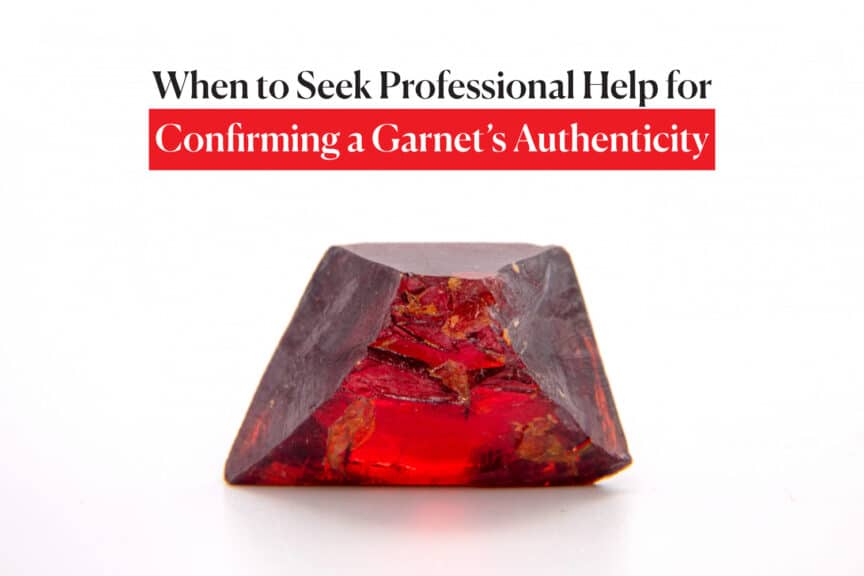
While at-home tests can provide useful insights into a garnet’s authenticity, there are times when knowing how to test if a garnet is real requires professional help. Certified gemologists and specialized laboratory testing offer the most accurate and reliable methods to confirm whether a garnet is genuine.
Certified Gemologists
Consulting a certified gemologist is one of the best ways to ensure your garnet is real. These professionals are trained in gemstone identification and appraisal, using specialized tools and techniques to provide definitive answers.
Benefits of Consulting a Gemologist:
- Expert Analysis: Gemologists use tools like microscopes, refractometers, and polariscopes to analyze gemstones more deeply.
- Detailed Appraisals: They can provide a full evaluation of your garnet, including its authenticity, type, and market value.
- Certification: You’ll receive a written report or certificate confirming the garnet’s authenticity, which is valuable for resale or insurance purposes.
- Peace of Mind: Their expertise eliminates the guesswork, ensuring you have a real and valuable garnet.
When to Consult a Gemologist:
- If you’re purchasing a high-value garnet.
- If the garnet has sentimental or investment value.
- If you’re unsure about the results of at-home tests.
Laboratory Testing
For the most accurate results, laboratories specializing in gemstone testing can conduct advanced scientific analyses. These tests provide insights that aren’t possible with at-home methods or visual inspections.
Common Laboratory Tests:
- Spectroscopy: Identifies a gemstone’s unique light absorption patterns, helping to differentiate garnets from imitations or synthetics.
- X-Ray Diffraction: Reveals the crystal structure of the gemstone, confirming its mineral type.
- Infrared Spectroscopy: Analyzes the chemical composition to verify authenticity and origin.
- Specific Gravity Testing: More precise than at-home methods, using calibrated equipment for exact measurements.
Benefits of Laboratory Testing:
- Definitive Results: Advanced tests leave no room for doubt about the stone’s authenticity.
- Complete Data: Reports often include information about the garnet’s origin, treatments, and value.
- Trustworthy Documentation: Laboratory reports are highly respected in the gemstone market and can increase the stone’s resale or appraisal value.
When to Seek Professional Help: Key Signs
- You’re investing in a high-value garnet or rare variety.
- The garnet shows mixed or inconsistent results from at-home tests.
- You need certification for insurance, resale, or estate planning purposes.
By consulting certified gemologists or utilizing laboratory testing, you ensure that your garnet’s authenticity is verified with professional accuracy. While at-home methods are a great starting point, these professional services provide unmatched expertise and reliability.
Tips for Buying Authentic Garnets
Shop from Amazon
When purchasing garnets, taking a cautious and informed approach ensures you get a genuine gemstone that matches its price and value. Here are some Authentic Garnet from Amazon to help you make confident buying decisions.
Garnet
Browse Garnet →Shop from Reputable Dealers
The easiest way to ensure authenticity is to purchase garnets from trusted and well-established sellers. Reputable dealers prioritize quality and transparency in their offerings.
Why It Matters:
- Reputable dealers often source gemstones ethically and provide accurate descriptions.
- They are more likely to disclose treatments or enhancements applied to the garnet.
Tips:
- Look for sellers who specialize in gemstones or fine jewelry.
- Verify the dealer’s credentials, such as certifications from recognized gemological institutions.
- Seek reviews and testimonials to confirm their reliability.
Related Reading: If you’re exploring other unique gemstones, check out Spider Quartz: Origins, Facts, and Why Youʼll Love It for an introduction to another fascinating gem.
Ask for Documentation
Documentation is a critical part of purchasing gemstones, especially for high-value garnets. Authenticity reports and warranties provide assurance and protect your investment.
What to Ask For:
- Authenticity Reports: Certified reports confirm that the garnet is natural, untreated, and matches the seller’s description.
- Warranties: A warranty adds an extra layer of protection, allowing you to return the garnet if its authenticity is later questioned.
- Origin Information: For certain garnet varieties, knowing the stone’s origin can add value and intrigue.
Practical Advice:
- If the garnet doesn’t come with documentation, proceed with caution.
- Verify the authenticity of the certificate by checking its issuing authority.
Related Reading: If you enjoy delving into the world of gemstones, don’t miss Purple Obsidian: Origins, Facts, and Why Youʼll Love It for insights on another enchanting stone.
How to Tell if a Garnet Is Real with a Flashlight
The flashlight test is free, fast, and reveals three diagnostic properties at once. You need a bright single-point LED (your phone flashlight works) and a dark room.
Step 1 — Shine the light through the stone
Hold the stone 2 inches above the LED, point the beam through the pavilion into your eye. A real red garnet transmits a single deep red color across the whole stone. A fake made from red glass transmits an orange-ish or lighter red, often with uneven color intensity.
Step 2 — Look for internal silk
Natural garnet almost always contains fine needle-like inclusions (“silk”) visible under flashlight transmission. These are rutile needles or healed fractures. Glass has round air bubbles instead. Lab-grown synthetic garnet has curved growth lines.
Step 3 — Check for doubled facet edges
Rotate the stone slowly while watching the back facet edges through the crown. Real garnet is singly refractive — the back facet edges appear as single sharp lines. If you see doubled edges, your stone is doubly refractive and is NOT garnet (likely ruby, which is doubly refractive, or a doublet).
Step 4 — Watch for a bright central reflection
Real garnet with a well-cut pavilion returns a bright single-point reflection at the stone’s center under direct light. Red glass returns a diffuse glow. Red cubic zirconia returns rainbow fire the way diamond does — garnet does not show rainbow dispersion.
Garnet Under UV Light — Does It Glow?
Red garnet (almandine, pyrope, rhodolite) does NOT fluoresce under long-wave or short-wave UV light. This is the single most useful diagnostic property because it immediately separates garnet from ruby — the most common fake or confusion gem.
| Stone | Long-Wave UV (365 nm) | Short-Wave UV (254 nm) | What This Means |
|---|---|---|---|
| Almandine garnet (common red) | Inert | Inert | No glow — real red garnet is inert |
| Pyrope garnet (dark red) | Inert | Inert | No glow |
| Rhodolite garnet (purplish red) | Inert | Inert | No glow |
| Spessartine garnet (orange) | Inert to weak orange | Inert | Rare weak reaction only |
| Tsavorite garnet (green) | Inert to very weak | Inert | Natural green garnet is inert |
| Demantoid garnet (green) | Weak greenish-yellow | Inert | The one garnet variety that can fluoresce |
| Ruby (confusion gem) | Strong red glow | Moderate red | If “garnet” glows red = probably ruby |
| Red glass | Variable (often yellow-green) | Variable | Any color except red = not garnet |
| Red spinel | Weak to moderate red-orange | Inert | Weaker than ruby but can confuse |
| Red cubic zirconia | Variable (often yellow or orange) | Variable | Not red glow |
Verdict: point a cheap $10 365nm UV blacklight at your stone in a dark room. If it glows red, it is NOT red garnet. If it stays inert (dark), it passes the UV diagnostic. Combine with the magnet test for a two-test confirmation that takes 60 seconds total.
The Garnet Magnet Test — The Fastest Diagnostic You Can Buy
Iron-rich garnet varieties — almandine, pyrope, rhodolite, and some spessartine — contain enough iron to react weakly to a strong neodymium (rare earth) magnet. This reaction is unique among common red gemstones: ruby, red spinel, red glass, red cubic zirconia, and red tourmaline all show zero magnetic reaction.
How to Run the Magnet Test
- Buy a strong N45 or N52 neodymium magnet (sold at hardware stores or Amazon for $3–$8)
- Place the loose stone on a smooth surface (polished table, mirror, glass)
- Hold the magnet 1 cm above the stone and slowly lower it
- A real iron-rich garnet will drag toward or stick weakly to the magnet when the magnet is within 2–3 mm. You may need to tilt the stone to see the pull.
- If the stone shows NO reaction at all, it is either a non-magnetic garnet variety (tsavorite, grossular, demantoid, uvarovite) or it is not garnet.
| Garnet Variety | Magnetic Reaction | Common Color | What This Means |
|---|---|---|---|
| Almandine | Strong (sticks) | Deep red to purplish red | Most common red garnet. Very magnetic. |
| Pyrope | Moderate to strong | Blood red to orange-red | High iron content. Magnetic. |
| Rhodolite | Moderate | Purplish red to pink | Pyrope-almandine blend. Weakly magnetic. |
| Spessartine | Weak to moderate | Orange to red-orange | Manganese-rich with some iron. Variable. |
| Grossular (incl. hessonite) | None | Honey, cinnamon, or green | Calcium-aluminum garnet, no iron. Not magnetic. |
| Tsavorite | None | Vivid green | Vanadium-colored grossular. Not magnetic. |
| Demantoid | None to very weak | Vivid green | Andradite garnet. Weakly magnetic from iron trace. |
| Color-change garnet | Weak | Blue-green to red | Pyrope-spessartine blend. Variable magnetic reaction. |
Verdict: if your red stone sticks to a neodymium magnet, you have real iron-rich garnet (almandine or pyrope). This is a one-way test — a positive result is strong proof of garnet, but a negative result does not rule out garnet (grossular, tsavorite, and demantoid are not magnetic). Pair with the UV test for confirmation.
Mehedi’s Take: “I keep a $5 neodymium magnet in my jewelry kit next to my loupe. More estate-jewelry ‘rubies’ turn out to be almandine garnet than you’d expect — a 1-second magnet pass tells me instantly before I even reach for the refractometer. It’s the fastest ‘ruby vs garnet’ test ever invented.” — Mehedi Hasan, Diamond Industry Veteran
Scratch and Hardness Test — Garnet on the Mohs Scale
Garnet sits at Mohs 7–7.5. Specific hardness varies by variety: almandine 7.0–7.5, pyrope 7.0–7.5, rhodolite 7.0–7.5, spessartine 6.5–7.5, tsavorite 7.0–7.5, demantoid 6.5–7.0.
What this hardness means for home testing:
- Garnet scratches glass (Mohs 5.5). This rules out plastic, glass, and most imitation materials.
- Garnet scratches steel (Mohs 4.5). A steel knife or file leaves no mark on real garnet.
- Garnet does NOT scratch sapphire or ruby (both Mohs 9). This separates garnet from ruby, which is critical because garnet and ruby are often confused.
- Garnet does NOT scratch topaz (Mohs 8).
- Garnet scratches easier than quartz (Mohs 7) — fine abrasion from softer gems is possible with prolonged contact.
The Right Way to Run a Scratch Test
Scratch testing damages the stone surface. Only use this test on an unmounted stone you own, and only on a non-visible area (girdle or pavilion edge). Press the stone edge firmly into a scrap piece of glass. A real garnet leaves a visible white scratch in the glass with no mark on itself. Glass against glass just skids with no scratch.
The Garnet Acid Test — Why Not to Do It at Home
The “garnet acid test” refers to a diagnostic where a drop of hydrofluoric acid or dilute sulfuric acid is applied to the stone to check reaction. Real garnet is chemically inert to common acids; glass etches under acid; some plastics discolor.
Three reasons not to run this test at home:
- Hydrofluoric acid causes severe skin burns and is restricted or illegal in many jurisdictions
- Acid etches the metal setting of mounted stones, destroying the jewelry
- Modern coated glass can fake inert behavior for one or two drops
If you want chemical-level verification, send the stone to a GIA, AGL, or GRS lab for proper spectroscopy. A $75–$150 lab test is far safer than acid work and gives you a legally valid certificate.
Specific Gravity Test — The Density Diagnostic
Specific gravity measures how dense a stone is compared to water. Garnet is noticeably denser than glass, quartz, and most imitations.
| Material | Specific Gravity (g/cm³) | What This Means |
|---|---|---|
| Almandine garnet | 4.00–4.30 | Densest common red garnet — sinks fast |
| Pyrope garnet | 3.65–3.87 | Mid-density red garnet |
| Rhodolite garnet | 3.74–3.89 | Between pyrope and almandine |
| Spessartine garnet | 4.12–4.30 | High density orange garnet |
| Tsavorite garnet | 3.57–3.65 | Lower-density green garnet |
| Demantoid garnet | 3.82–3.85 | Specific green andradite range |
| Ruby | 3.98–4.08 | Overlaps with pyrope and almandine — SG alone cannot separate them |
| Red glass | 2.40–2.90 | Much lighter than any real garnet |
| Red cubic zirconia | 5.60–6.00 | Much denser than garnet — easy to distinguish |
| Red spinel | 3.58–3.62 | Overlaps with pyrope |
Verdict: if you have a jeweler’s hydrostatic scale or heavy liquid kit, SG is one of the strongest home tests. The gap between garnet (3.4–4.3) and glass (2.5) is huge — a stone that feels suspiciously light in the hand is almost certainly glass or plastic. Garnet feels dense for its visible size.
The 7 Garnet Varieties You Need to Know
“Garnet” is actually a family of six closely-related minerals that share crystal structure but differ in composition and color. Knowing which variety you have changes which tests apply and how much the stone is worth.
| Variety | Color | Refractive Index | SG | Price per Carat (2026) | What This Means |
|---|---|---|---|---|---|
| Almandine | Deep red to purplish red | 1.78–1.83 | 4.00–4.30 | $20–$80 | Most common red garnet; iron-rich, magnetic |
| Pyrope | Blood red to orange-red | 1.72–1.76 | 3.65–3.87 | $40–$150 | “Bohemian garnet”; often confused with ruby |
| Rhodolite | Raspberry pink to purplish | 1.75–1.78 | 3.74–3.89 | $80–$400 | Pyrope-almandine blend; premium pink-red |
| Spessartine | Orange to red-orange (“mandarin”) | 1.78–1.81 | 4.12–4.30 | $150–$1,500 | Mandarin color is premium; Namibian material tops the price |
| Tsavorite | Vivid green | 1.74–1.75 | 3.57–3.65 | $300–$8,000 | Most valuable green garnet; rivals emerald |
| Demantoid | Vivid green to yellow-green | 1.88–1.89 | 3.82–3.85 | $500–$10,000+ | Highest dispersion of any garnet; “horsetail” inclusions prized |
| Hessonite (grossular) | Honey to cinnamon brown | 1.74–1.75 | 3.59–3.68 | $30–$200 | Common garnet variety; distinctive “scotch in water” look |
| Color-change | Blue-green to purple-red | 1.76–1.78 | 3.80–3.91 | $500–$5,000 | Pyrope-spessartine; shifts color like alexandrite |
| Star garnet | Red-brown to red-purple | 1.75–1.80 | 3.90–4.20 | $50–$300 | Shows 4-ray or 6-ray star; Idaho mines are a famous source |
Verdict: if your stone is red, it is almost certainly almandine, pyrope, or rhodolite (99% of commercial red garnet). If it’s orange, spessartine. If green, tsavorite or demantoid. If honey-colored, hessonite. Each variety has slightly different diagnostic properties — match your test results to this table before concluding.
Ruby vs Garnet — The 5 Differences That Matter
Ruby and red garnet are the two most-confused red gemstones. A $5,000 ruby and a $50 garnet can look identical to an untrained eye. The five diagnostic differences:
| Property | Ruby | Garnet (almandine/pyrope) | What This Means |
|---|---|---|---|
| UV fluorescence | Strong red glow | Inert (no glow) | Single most diagnostic test — do this first |
| Magnetism | None | Weak to moderate pull | Fastest test if you have a neodymium magnet |
| Hardness | Mohs 9 | Mohs 7–7.5 | Ruby scratches garnet; garnet can’t scratch ruby |
| Refractive index | 1.76–1.78 (doubly refractive) | 1.72–1.83 (singly refractive) | Under 10× loupe, ruby shows doubled back-facet edges, garnet does not |
| Color under daylight | Pure “stoplight” red, often with pink undertone | Red with slight brown or purple undertone | Fine ruby looks “cleaner” red than any garnet |
| Price per carat | $500–$30,000+ | $20–$150 (common red varieties) | Price alone tells you — a $100 “ruby” is almost certainly garnet or glass |
Verdict: UV + magnet test together separate ruby from garnet in under a minute. Ruby glows red + no magnetism = ruby. No glow + magnetic pull = iron-rich red garnet. Any other combination means dig deeper with refractometer or send to a lab.
What Fakes Garnet? The 5 Materials to Watch For
- Red glass — the #1 fake. Mohs 5.5, SG 2.5, often has round air bubbles under loupe, breath test clears slowly, no magnetic pull. Sold cheaply in costume jewelry and some antique estate pieces.
- Red cubic zirconia — Mohs 8.5, SG 5.6–6.0, shows rainbow fire under light, inert UV. Garnet does NOT show rainbow dispersion.
- Synthetic garnet (YAG and GGG) — Yttrium Aluminum Garnet and Gadolinium Gallium Garnet are lab-created red stones used in cheap jewelry. SG 4.6 (YAG) or 7.0+ (GGG) — denser than natural garnet. Must be disclosed as synthetic.
- Red spinel — rare, more valuable than garnet, but visually similar. SG 3.6, Mohs 8, singly refractive. Can be mistaken for pyrope garnet. Not magnetic.
- Doublets and triplets — garnet-topped doublets use a thin garnet crown glued to a glass or quartz base. Under 10× magnification, the glue line is visible along the girdle. Breath test may fog the glue line asymmetrically.
For a verified authentic garnet with full lab paperwork, buy from a Blue Nile gemstone retailer or a GIA-certified dealer. Spending $150–$500 for a fine-color 1-carat garnet from a reputable source removes the authentication guesswork entirely.
Mehedi’s Take: “The breath / fog test everyone loves on YouTube is the weakest of the home tests. Modern glass with hydrophobic coatings clears fog in 1 second, exactly like real garnet. Trust the magnet, the UV, and the scratch — skip the fog.” — Mehedi Hasan, Diamond Industry Veteran
How Much Is Real Garnet Worth? [year] Pricing Reference
Garnet prices vary wildly by variety. A $20 almandine and a $10,000 demantoid are both “real garnets” — the species determines the market value.
| Variety | 1ct Commercial Grade | 1ct Fine Grade | 1ct Investment Grade | What This Means |
|---|---|---|---|---|
| Almandine (common red) | $20–$50 | $50–$150 | $150–$300 | Cheapest variety — expect $20–$80 for most retail pieces |
| Pyrope (“Bohemian”) | $40–$100 | $100–$300 | $300–$600 | Fine blood-red color commands premium |
| Rhodolite | $80–$200 | $200–$500 | $500–$1,000 | Raspberry color is sought after |
| Spessartine (mandarin) | $150–$400 | $400–$1,200 | $1,200–$3,000 | Namibian mandarin tops the market |
| Tsavorite (green) | $300–$1,000 | $1,000–$3,500 | $3,500–$8,000 | Chrome-vivid green rivals fine emerald |
| Demantoid (green) | $500–$2,000 | $2,000–$6,000 | $6,000–$15,000+ | Russian horsetail inclusions set records |
| Color-change | $500–$1,500 | $1,500–$5,000 | $5,000–$12,000 | Vivid shift premium |
| Hessonite | $30–$80 | $80–$200 | $200–$500 | Honey orange, lower demand |
Verdict: if someone offers you a “garnet” for $500+ per carat, confirm the variety first — only tsavorite, demantoid, mandarin spessartine, color-change, and premium rhodolite reach that price. A red almandine or pyrope at $500 is overpaid; a tsavorite at $500 is a steal.
Decision Matrix — Which Test to Run for Your Situation
| Your Situation | Run These Tests | Spend | Confidence | What This Means |
|---|---|---|---|---|
| Inherited a vintage “ruby” ring — want to know if it’s garnet | UV + magnet | $15 total | 95% | These two tests separate ruby from garnet decisively |
| Buying a loose stone online, want to verify before paying | UV + magnet + request GIA cert | $75–$150 lab fee | 99% | Lab certificate is final word; home tests confirm before paying |
| Flea market “garnet” for $20 | Scratch glass + magnet | $5 | 90% | If it scratches glass + sticks to magnet, you have real almandine |
| Think your green “emerald” might be tsavorite | SG test (hydrostatic scale) | $30 scale | 95% | Tsavorite SG 3.6, emerald SG 2.7 — large gap |
| Antique Victorian jewelry (likely Bohemian pyrope) | UV + magnet + loupe | $20 | 95% | Victorian pieces almost always use pyrope garnet |
| Red stone shows rainbow fire | Stop — it’s cubic zirconia | $0 | 99% | Garnet does not show rainbow dispersion |
| Buying a $500+ garnet, need confidence | GIA or AGL lab cert | $75–$150 | 100% | Any garnet over $500 should come with lab paperwork |
Verdict: the UV blacklight + the neodymium magnet together cost under $15 and handle 95% of real-world garnet identification. For anything expensive or disputed, pay for GIA. Everything else is a judgment call based on how much the stone is worth to you.
Mehedi’s Final Take: “The internet is full of garnet ‘tests’ that work on paper but fail in practice. Stick to the three that always work: scratch (hardness), magnet (iron content), UV (fluorescence). Any single one of those gives you 80% confidence. All three together give you certainty. Then only escalate to a lab if the stone is worth more than $500.” — Mehedi Hasan, Diamond Industry Veteran
FAQs — Testing Garnet Authenticity
How can I tell if a garnet is real?
Three tests at home: scratch test (real garnet Mohs 7-7.5 scratches glass), UV test (red garnet does NOT fluoresce; ruby glows red), magnet test (iron-rich almandine and pyrope stick weakly to a neodymium magnet).
How to tell if a garnet is real with a flashlight?
Shine a phone flashlight through the pavilion into your eye. Real garnet transmits a single deep red color with no doubled facet edges and shows internal silk-like inclusions. Glass shows round air bubbles; ruby shows doubled back facet edges.
Does garnet glow under UV light?
Red garnet (almandine, pyrope, rhodolite) does NOT glow under UV light. Demantoid green garnet shows weak greenish-yellow fluorescence. Ruby glows strongly red – so if your “garnet” glows red, it is probably ruby.
Does garnet glow under blacklight?
No for red varieties (almandine, pyrope, rhodolite). Weakly for demantoid green garnet only. Red fluorescence under 365nm blacklight is diagnostic of ruby, NOT garnet.
Do garnets fluoresce?
Almandine, pyrope, and rhodolite garnets are inert under UV light. Only demantoid (green andradite) shows weak greenish fluorescence. Zero fluorescence is a strong indicator of real red garnet.
Are garnets magnetic?
Iron-rich varieties yes – almandine (strong) and pyrope (moderate) stick weakly to a strong neodymium magnet. Grossular, tsavorite, hessonite, and demantoid show little or no magnetism. The magnet test is diagnostic for iron-rich red garnets.
What is the Mohs hardness of garnet?
Mohs 7-7.5 for most garnet varieties. Almandine, pyrope, rhodolite, tsavorite: 7.0-7.5. Spessartine: 6.5-7.5. Demantoid: 6.5-7.0. All garnet varieties scratch glass (Mohs 5.5).
Does garnet scratch easily?
Garnet is harder than most everyday materials – it does not scratch easily. It will scratch glass, steel, and quartz. Only harder gems (sapphire, ruby, topaz, diamond) can scratch garnet. For daily-wear jewelry, garnet is durable enough.
Is garnet harder than glass?
Yes. Garnet is Mohs 7-7.5; window glass is Mohs 5.5. Real garnet always scratches glass. If a stone sold as garnet cannot scratch glass, it is not real garnet.
What is a garnet test point?
The specific diagnostic tests used to confirm garnet authenticity: Mohs hardness, specific gravity, refractive index (singly refractive), UV fluorescence (inert for red varieties), and iron-based magnetism. Each is a “test point” in gemological identification.
How to tell real garnet from fake?
Scratch glass test (real garnet scratches, glass does not), UV test (no red glow for garnet; red glow means ruby), magnet test (iron-rich garnet shows magnetic pull), loupe inspection (no bubbles in real garnet; bubbles indicate glass).
Ruby vs garnet – how do you tell the difference?
UV test is the fastest: ruby glows red, red garnet is inert. Magnet test confirms: iron-rich garnet is weakly magnetic, ruby is not. Hardness: ruby (Mohs 9) scratches garnet, garnet does not scratch ruby. Price: ruby $500+/ct, common garnet $20-150/ct.
What is the specific gravity of garnet?
Garnet SG ranges 3.4-4.3 g/cm3 by variety. Almandine 4.00-4.30, pyrope 3.65-3.87, rhodolite 3.74-3.89, spessartine 4.12-4.30, tsavorite 3.57-3.65, demantoid 3.82-3.85. All varieties are denser than glass (SG 2.5).
What are the main garnet varieties?
Six primary species: almandine (red, iron), pyrope (red, magnesium), spessartine (orange, manganese), grossular (honey/green, calcium-aluminum), andradite (green/yellow/black, calcium-iron), uvarovite (green, calcium-chromium). Common names: rhodolite, tsavorite, demantoid, hessonite, mandarin.
How much is a garnet worth per carat?
Varies by variety. Almandine $20-80, pyrope $40-150, rhodolite $80-400, spessartine mandarin $150-1,500, tsavorite $300-8,000, demantoid $500-10,000+. Red garnet is affordable; green and color-change varieties command premium prices.
What fakes garnet most often?
Red glass (#1 fake), red cubic zirconia (shows rainbow fire), synthetic YAG and GGG (lab-created heavier), red spinel (natural but confused with pyrope), garnet-topped doublets (glass core with garnet crown).
Can you test garnet with a magnet?
Yes – use a strong N45 or N52 neodymium magnet. Iron-rich almandine and pyrope garnets drag weakly or stick. Non-iron varieties (grossular, tsavorite, hessonite) show no reaction. The magnet test takes 30 seconds.
What is a garnet acid test?
A diagnostic using hydrofluoric or sulfuric acid – garnet is chemically inert while glass etches. Do NOT run this test at home: hydrofluoric acid is dangerous and often illegal. Send the stone to a GIA lab for safe professional testing instead.
How to identify raw garnet?
Raw garnet forms in dodecahedral crystals (12-sided) or trapezohedral shapes (24-sided). Red color, Mohs 7+ hardness, dense (sinks fast in water), iron-rich varieties stick to magnet. Found in metamorphic rocks like schist and gneiss.
Are synthetic garnets real?
Yttrium Aluminum Garnet (YAG) and Gadolinium Gallium Garnet (GGG) are lab-created and share the garnet crystal structure, but they are chemically different from natural garnet varieties. Must be sold as “synthetic” or “lab-created” by law.
Does garnet scratch glass?
Yes. Garnet is Mohs 7-7.5 and window glass is Mohs 5.5, so garnet always scratches glass. If a stone cannot scratch glass, it is not garnet.
What is the refractive index of garnet?
1.72-1.89 depending on variety. Almandine 1.78-1.83, pyrope 1.72-1.76, rhodolite 1.75-1.78, tsavorite 1.74-1.75, demantoid 1.88-1.89. All garnets are singly refractive (unlike doubly refractive ruby).
See Also — Related Gemstone Testing Guides
- How to Tell if a Diamond Is Real — same test family applied to diamond
- Moissanite Under UV Light — UV diagnostics for moissanite
- Does Moissanite Pass a Diamond Tester — thermal vs electrical ID
- Sapphire Gemstone Guide
- Sapphire Luster Guide
- Lab vs Real Sapphire
- Moissanite Hardness — Mohs scale reference
- Is Moissanite a Real Diamond
- Black Jasper Guide
- Moonstone Guide
Conclusion
Testing garnet authenticity doesn’t have to be complicated. With the right knowledge and tools, you can start by performing simple at-home tests like the Scratch Test and Light Test.
For more precise results, you can try advanced techniques like the Specific Gravity Test or a UV Light Examination. When in doubt on How to Test if a Garnet Is Real, professional services like certified gemologists or laboratory testing are invaluable.
Whether you’re buying garnets for personal use or investment, remember to:
- Purchase from reputable dealers who provide certifications and warranties.
- Combine multiple at-home tests with professional verification to ensure accuracy.
Garnets are fascinating gemstones with a rich history and stunning visual appeal. By taking the time to verify their authenticity, you’ll not only protect your investment but also gain a deeper appreciation for these timeless treasures. Stay informed, stay confident, and let the beauty of garnets enrich your life.
Explore More: Curious about other stunning gems? Discover Pink Moonstone: Origins, Facts, and Why Youʼll Love It or Brown Agate: Healing Properties, Benefits, and How to Use It.